

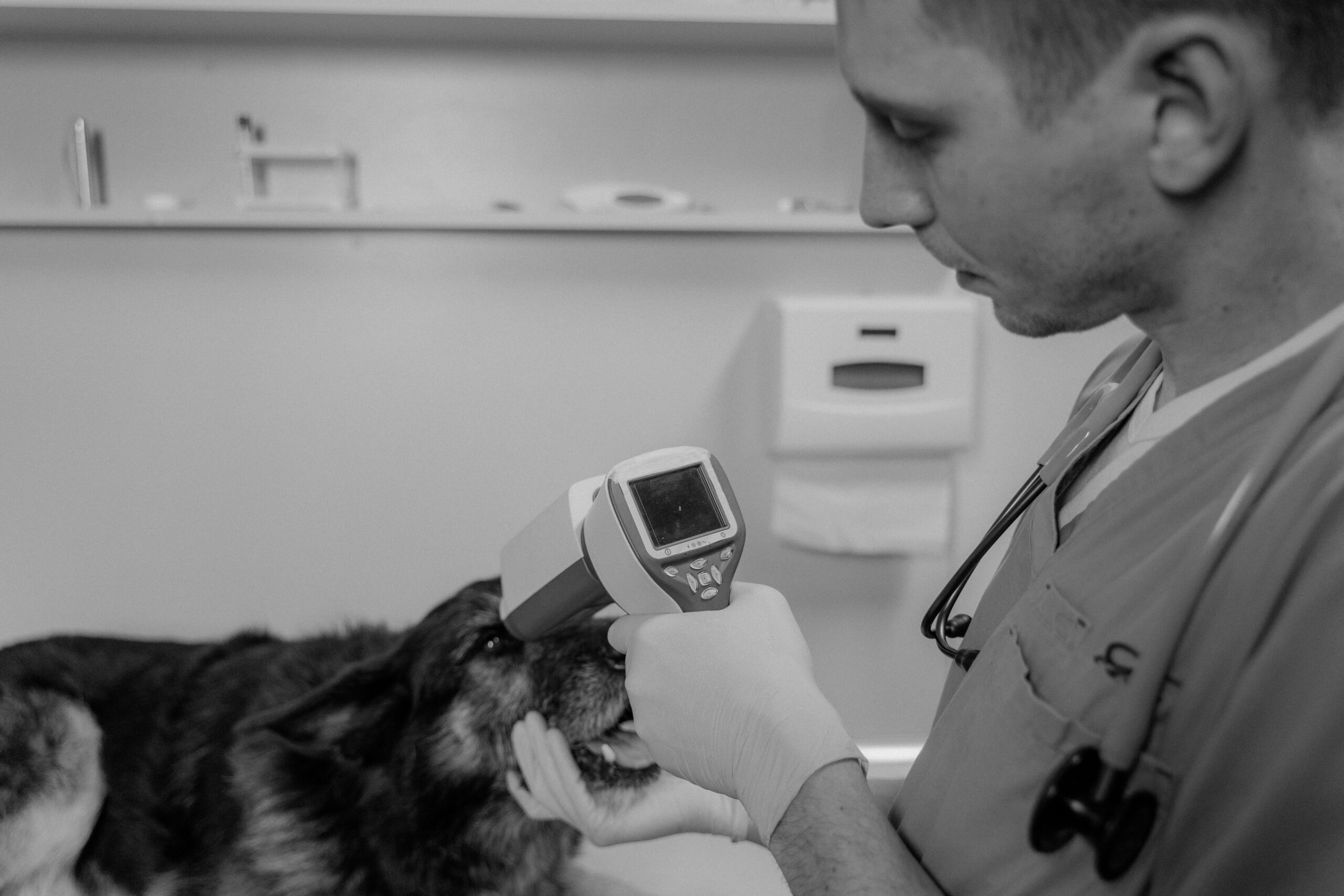
At the beginning of 2025, researchers at Cornell University’s College of Veterinary Medicine in the United States published promising results on the use of Artificial Intelligence (AI) to identify signs of osteoarthritis in dogs through the automated analysis of radiographs. Shortly beforehand, European universities had already been using algorithms to detect pulmonary abnormalities in CT scans, while research centers involved in precision livestock farming were employing computer vision to monitor cattle locomotion, feed intake, and welfare in real time. Within just a few years, AI has moved from being an experimental technology to occupying an increasingly important role in veterinary research and, progressively, in clinical practice as well.
This movement reflects a trend observed throughout virtually the entire healthcare field. Tools capable of processing thousands of images, correlating clinical databases, or locating scientific evidence within seconds have begun performing tasks that previously required hours of work. The most visible consequence has not been the replacement of professionals, but rather a profound change in the way information circulates. For the first time, students and veterinarians have almost instantaneous access to an amount of knowledge that cannot possibly be absorbed through individual experience alone.
This technological progress, however, has produced an unexpected effect. The more accessible information becomes, the greater the gap between consulting an answer and knowing how to interpret it. In Veterinary Medicine, this distinction is particularly relevant because diagnosis rarely depends on a single isolated piece of data. The same radiographic finding may have completely different meanings depending on the species, age, anatomical conformation, clinical history, or production purpose of the animal. It is precisely at this point that practical training retains an irreplaceable role.
The discussion is no longer hypothetical. In 2025, the Brazilian Federal Council of Veterinary Medicine devoted an entire issue of its scientific journal to the impacts of Artificial Intelligence on professional education, addressing the risks of uncritical dependence on algorithms, the ethical challenges associated with the use of these tools, and the need to strengthen competencies that no platform can reproduce: clinical reasoning, the technical performance of procedures, and decision-making in urgent and complex situations.
AI expands the profession’s analytical capabilities, but it also reinforces a principle that has accompanied it since its origins: theoretical knowledge and practical skills do not belong to the same learning domain. The former can be continuously updated through books, articles, or digital platforms. The latter depends on repetition, supervised training, and progressively developing familiarity with anatomical structures, instruments, and surgical techniques.
From Research to the Veterinary Clinic
Although tools such as Gemini, ChatGPT, and Claude have only recently popularized the topic, the application of Artificial Intelligence in scientific research predates the emergence of generative language models by many years. Since the last decade, research groups have been working with machine-learning algorithms to interpret diagnostic tests, develop epidemiological models, and analyze large databases related to animal health.
At the University of California, for example, researchers have been using computational models to identify abnormalities in orthopedic and thoracic imaging studies. At the University of Cambridge, studies involving computer vision analyze locomotion patterns in dairy cattle to detect early signs of lameness, one of the leading causes of economic losses in the global livestock industry. Meanwhile, centers specializing in equine medicine employ algorithms capable of recognizing subtle biomechanical asymmetries during animal movement, making it possible to identify locomotor abnormalities before they become apparent through conventional clinical assessment.
Scientific output has followed this expansion. A survey published in the Scopus database shows consistent growth in the number of articles related to Artificial Intelligence applied to Veterinary Medicine over the past decade, covering areas such as diagnostic imaging, digital pathology, epidemiology, animal reproduction, anesthesiology, and surgery. In other words, AI is no longer a topic restricted to computer science laboratories; it has become a permanent subject of research within veterinary schools themselves.
In clinical practice, perhaps the best-known application is in radiology. Algorithms trained on thousands of examinations can highlight areas suspected of fractures, joint abnormalities, or pulmonary lesions, functioning as a second reader for the veterinarian. The advantage, therefore, goes beyond processing speed: in high-volume services, these tools can help reduce interobserver variability, draw attention to subtle abnormalities, and organize increasingly complex workflows.
This scenario helps explain why Artificial Intelligence has been presented as a support technology rather than a substitute for professional practice. Software can indicate that a particular image has a high probability of cranial cruciate ligament rupture. The algorithm, however, does not examine the animal’s gait, assess pain during joint manipulation, consider the history provided by the owner, or determine which surgical technique would provide the greatest benefit for that specific patient. And between recognizing a statistical pattern and deciding on a course of action lies a gap that remains the responsibility of the veterinarian.
What Artificial Intelligence Still Cannot Achieve Between Diagnosis and Treatment
The incorporation of artificial intelligence into Veterinary Medicine has brought clear benefits to activities involving information analysis. The same cannot be said for stages that depend on clinical judgment, technical execution, and decision-making in situations that rarely follow the behavior predicted by computational models.
A relatively simple example helps illustrate this difference. Two dogs may present similar imaging findings, both compatible with cranial cruciate ligament rupture. From that point onward, however, the similarities may end. Body weight, age, level of physical activity, concurrent diseases, muscle condition, anatomical conformation, and the animal’s expected functional demands directly influence the choice of treatment strategy. Interpreting the examination is only one stage of a much broader process involving clinical assessment, surgical planning, and postoperative follow-up.
This reality becomes even more evident in surgical fields. In recent years, Veterinary Medicine has witnessed the expansion of increasingly sophisticated orthopedic techniques, including digitally planned corrective osteotomies, the use of locking plates, three-dimensional printing to produce surgical guides, and the development of species- and size-specific implants. Access to information about these procedures has become easier than ever. Their execution, however, still requires progressive training, an in-depth understanding of anatomy, and technical mastery acquired through practice.
Learning a sequence of operative steps is only part of the challenge. In orthopedic surgery, small anatomical variations can completely change the way a procedure is performed. The direction of a surgical approach, the choice of implant, the positioning of a screw, or the correction of an angular axis all depend on spatial references that are difficult to develop through reading or passive observation alone.
This discussion has gained momentum in recent years because of another debate that extends beyond Artificial Intelligence itself: the expansion of remote education in healthcare professions. In 2025, the Brazilian federal government issued new guidelines restricting fully distance-based education for courses requiring in-person practical activities, including Medicine, Dentistry, Nursing, Veterinary Medicine, and other healthcare degrees. The measure was accompanied by professional organizations and scientific institutions that had been warning about the impossibility of fully replacing practical experiences with virtual activities.
The debate does not end with undergraduate education. Even after completing university training, much of professional development continues to take place in laboratories, training centers, professional development programs, and courses focused on specific skills. The technological evolution of Veterinary Medicine itself has contributed to increasing this need: the more sophisticated procedures become, the greater the demand for environments that allow professionals to train safely before applying those techniques in clinical practice.
What Changes in the Training of New Professionals
Today, the Brazilian market already has innovative tools that contribute to improving teaching and the learning process.
The advancement of AI has transformed the profile of skills valued by the veterinary market. For decades, an important part of professional education was associated with the ability to memorize information and accumulate technical knowledge. Today, when scientific articles, clinical protocols, and databases can be accessed within seconds, other skills are becoming increasingly relevant.
Several international veterinary schools are already discussing how to prepare professionals for a scenario in which information is widely available, while interpretation continues to depend on human experience and judgment. Reports produced by the American Veterinary Medical Association (AVMA) and institutions involved in European veterinary education point to the growing importance of clinical reasoning, the ability to integrate information from different sources, and decision-making in complex environments. In practice, the competitive advantage will no longer lie solely in access to knowledge, but increasingly in the ability to use it appropriately.
This change has direct implications for veterinary education. If algorithms can summarize articles, locate evidence, and suggest diagnostic hypotheses, it becomes even more important to develop skills that depend on practical experience. Familiarity with anatomical structures, for example, remains an essential requirement for anyone intending to work in surgery, orthopedics, veterinary dentistry, or diagnostic imaging. The same applies to skills related to tissue handling, procedure planning, and the technical execution of therapeutic interventions.
For this reason, there has been consistent growth in methodologies that bring theory and practice closer together during training. Simulators, skills laboratories, anatomical models, and training prototypes are being incorporated by universities and educational centers in different countries. The goal is not to replace clinical experience, but to create opportunities for students and professionals to develop confidence, motor coordination, and spatial understanding before encountering real-world situations.
The logic is similar to that observed in other highly complex fields. Pilots train on simulators before operating commercial aircraft. Surgeons use models to refine techniques before incorporating them into routine practice. In Veterinary Medicine, this movement accompanies the increasing sophistication of the diagnostic and therapeutic procedures available.
Technology and Training Move Forward Together
At first glance, Artificial Intelligence and practical training may seem like topics belonging to different worlds. In reality, both represent complementary responses to the same challenge: dealing with an ever-growing body of scientific knowledge and transforming it into safe decisions for patients.
Technology expands analytical capabilities. Algorithms can process information on a scale that is impossible for any individual professional. Practical training remains the environment where theoretical knowledge, clinical reasoning, and technical skills come together. It is in this setting that future veterinarians learn to interpret anatomical structures, develop spatial awareness, understand biomechanical relationships, and perform procedures that require precision.
The scenario taking shape for the coming years does not point to a competition between Artificial Intelligence and human experience. What we are seeing is a progressive integration between increasingly sophisticated digital tools and educational processes that emphasize practical competencies. As technology advances, so does the need for professionals capable of critically interpreting the information it produces.
Educational resources focused on anatomical training and the development of technical skills play a strategic role in contemporary veterinary education. Learning does not take place solely in front of a computer screen or through access to databases. It is also built through direct observation of structures, repetition of procedures, and experience accumulated throughout training.
Discover Nacional Ossos’ Educational Solutions
Nacional Ossos develops anatomical models, fracture and deformity prototypes, and solutions designed for the training of students, residents, professors, and healthcare professionals. Used in universities, professional training courses, and continuing education programs, these resources contribute to the study of anatomy, procedure planning, and the development of essential practical skills for clinical and surgical practice.
Explore the Nacional Ossos catalog and discover how our models can support the training of professionals prepared to work in an increasingly technological environment, without giving up the practical experience that remains the foundation of high-quality clinical decision-making.

